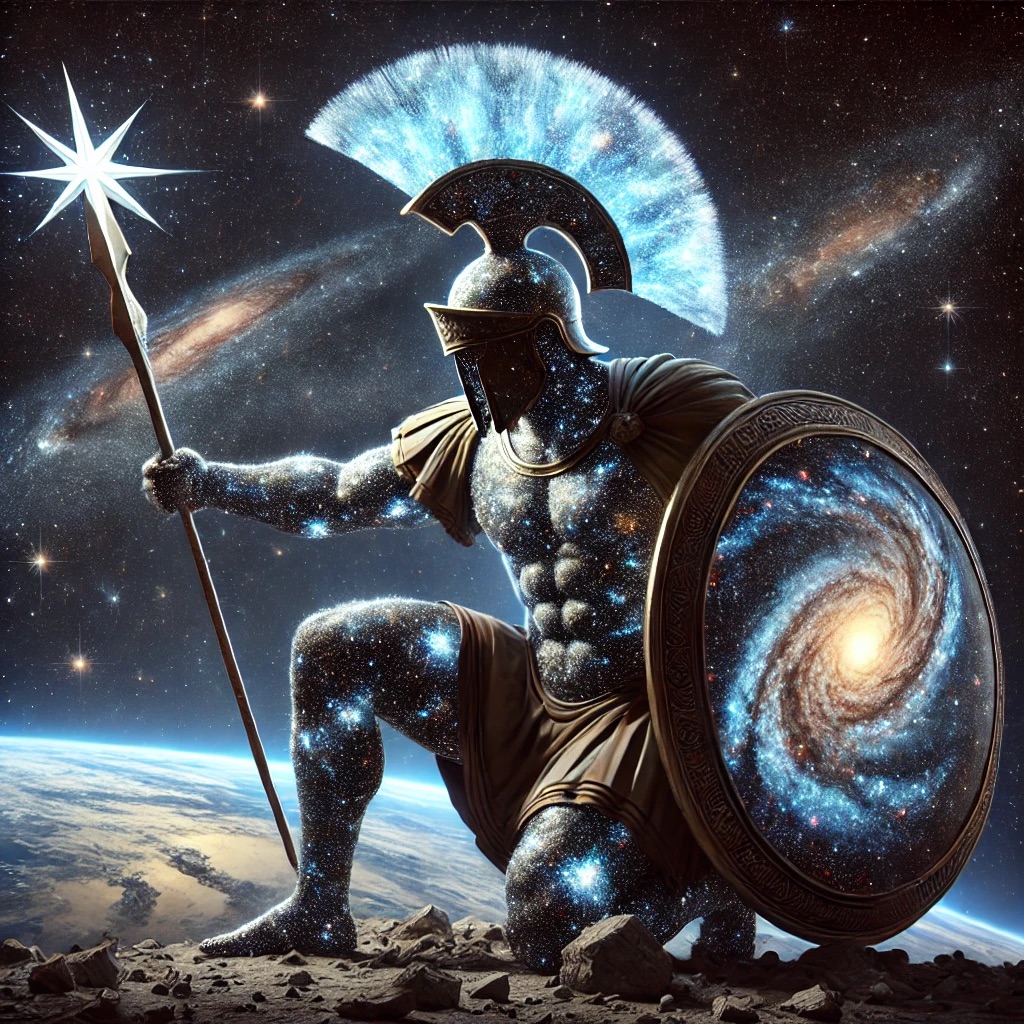
In 2001, a collective of beings started showing up in my meditations. They were persistent. They wanted to speak through me, wanted to channel through me, wanted access to my body.
I told them no.
Not politely.
I’d spent the better part of my life with someone outside of me telling me who I was. My mother had a very clear picture of Greg, and she shared it constantly, confidently, and without invitation. By the time I’d clawed my way out of that story, I had fought hard for the version of myself I was actually living in. I wasn’t about to hand the keys to something I couldn’t even see.
What I didn’t understand then was that my resistance wasn’t a spiritual failure. It was sovereignty doing exactly what it was supposed to do.
It took me 25 years to figure out the difference between being possessed and being expanded. Turns out they feel remarkably similar when you haven’t finished becoming yourself yet.
There’s a version of spiritual development that looks like dissolution. You meditate yourself into the field. You merge with the one. You release the ego, the self, the boundaries between you and everything else. And it feels like progress because it feels like surrender, and surrender has been sold to us as the highest spiritual act. No
I did this. I dispersed myself into collective pain thinking I was healing it. Thinking I was being of service.
What I was actually doing was making myself easier to influence. A dispersed energy is less coherent, less boundaried, less distinctly you. You become harder to locate, including by yourself. You’re basically a spiritual open house — everyone’s welcome, there are no locks on the doors, and you wonder why you feel terrible on a Tuesday.
That isn’t expansion. That’s disappearing with good intentions.
Here’s what I’ve come to understand: you cannot hold a multidimensional experience of yourself from inside a blurred self. You need somewhere to stand first.
The beings I eventually allowed in — the collective I’d been pushing away for years — they didn’t want to possess me. They wanted to speak with me.
There’s a version of me that exists in contact with them that isn’t the human Greg sitting in a chair with chronic pain and strong opinions about bad spiritual advice. It’s a different expression of the same consciousness. When I’m on a ship communicating with a mantis, that is my awareness — but it doesn’t look like me, doesn’t move like me, isn’t limited by this body. It’s me and something more simultaneously.
That only became available when I became solid enough here to hold it without losing the thread back to myself.
Multiple versions of me exist. I can feel the human one, the galactic one, others I don’t have language for yet. I can move my awareness between them depending on what I need to know. None of them replace each other. None of them cancel each other out. They’re all me — just tuned to different layers of the same frequency.
You have to be someone before you can be everything.
Now here’s the part that changes how I think about collective healing, and it’s the thing I most want to say.
We’ve been taught that healing the world means merging with its pain. Absorbing it. Feeling it on behalf of everyone. The more you can hold, the more spiritually advanced you are. Empaths get praised for how much they can take in. Sensitives are encouraged to open wider, feel deeper, dissolve further into the shared field of human suffering.
I think this is exactly backwards. And I say that as someone who tried it the other way for years and has the energetic bruises to prove it.
When you lose yourself in collective pain, you aren’t healing it. You’re adding your own dispersed energy to the noise. You become one more unindividuated current running through the field, indistinguishable from everything you were trying to help.
The switch is this: you heal collective pain by doing the work inside yourself as a distinct, boundaried, sovereign individual. You process your own inherited frequencies, your own ancestral patterns, your own story. You become more fully yourself. And that coherence — that consolidation of who you actually are — is what contributes something real to the field.
A tuning fork doesn’t heal a room by becoming the noise in it. It offers a clear tone. Everything else can choose to match it.
But here’s what nobody tells you about doing that work.
The things you heal don’t disappear. They don’t get filed away somewhere you’ll never have to look at them again. They stay with you. Your entire history stays with you. Every hard thing, every loss, every version of yourself you’ve had to outgrow.
What changes is your relationship to them.
You stop living inside them and start carrying them. That’s the whole difference. You’re still the person those things happened to. You still know exactly what it felt like. But you’re no longer running the old programs as if they’re current reality. You’re the witness now — the one who can see the whole map, including the hard parts, without being swallowed by any single point on it.
This is what makes it possible to feel collective pain without becoming it. You can feel everything — and I mean everything, grief, terror, rage, the particular kind of despair that shows up at 3am — and still know who you are while you’re feeling it. You’re not detaching. You’re not managing from a distance. You’re fully present and fully yourself at the same time.
That’s not bliss. I want to be clear about that. This has nothing to do with the soft-lit, gentle-music version of spiritual development where you achieve a permanent state of peaceful gray. What I’m describing is full color, full volume, full spectrum. The awe is real. So is the terror. The excitement lives right next to the grief.
The witness holds all of it without collapsing into any of it.
And that witness capacity turns out to be exactly what makes multidimensional perception possible.
Because when you can move your awareness between versions of yourself — the human one, the galactic one, the one on a ship that doesn’t look anything like you — you need something underneath all of it that holds the whole map. Something that doesn’t get lost when the terrain gets strange.
That’s the witness. That’s the individuated self. That’s the thing you spent all those years building without knowing what you were building it for.
Not me or them. Me and them.
Not human or galactic. Human and galactic.
Not healing myself or healing the world. Healing myself as the way I heal the world.
Not disappearing into oneness. Becoming so fully yourself that you can hold oneness without losing the thread.
Everything included. No part of you left behind.
That’s the whole teaching. That’s always been the whole teaching.
I just finally became individual enough to receive it.
Discover more from Shattering the Matrix
Subscribe to get the latest posts sent to your email.