
Most people think their wounds make them broken.
In this system, wounds make you legible.
They’re how the story finds you.
Pain isn’t just something that happened to you. It’s a signal. An open port. A place where the field can make contact. Unfinished emotion broadcasts. Not consciously. Not dramatically. Just enough to say: this frequency lives here.
That’s how the loops work. Not through logic. Not through fate. Through resonance.
Victim doesn’t meet victimizer by accident.
Savior doesn’t stumble into addict randomly.
Hero always finds a villain willing to play their part.
You don’t audition.
The field casts automatically.
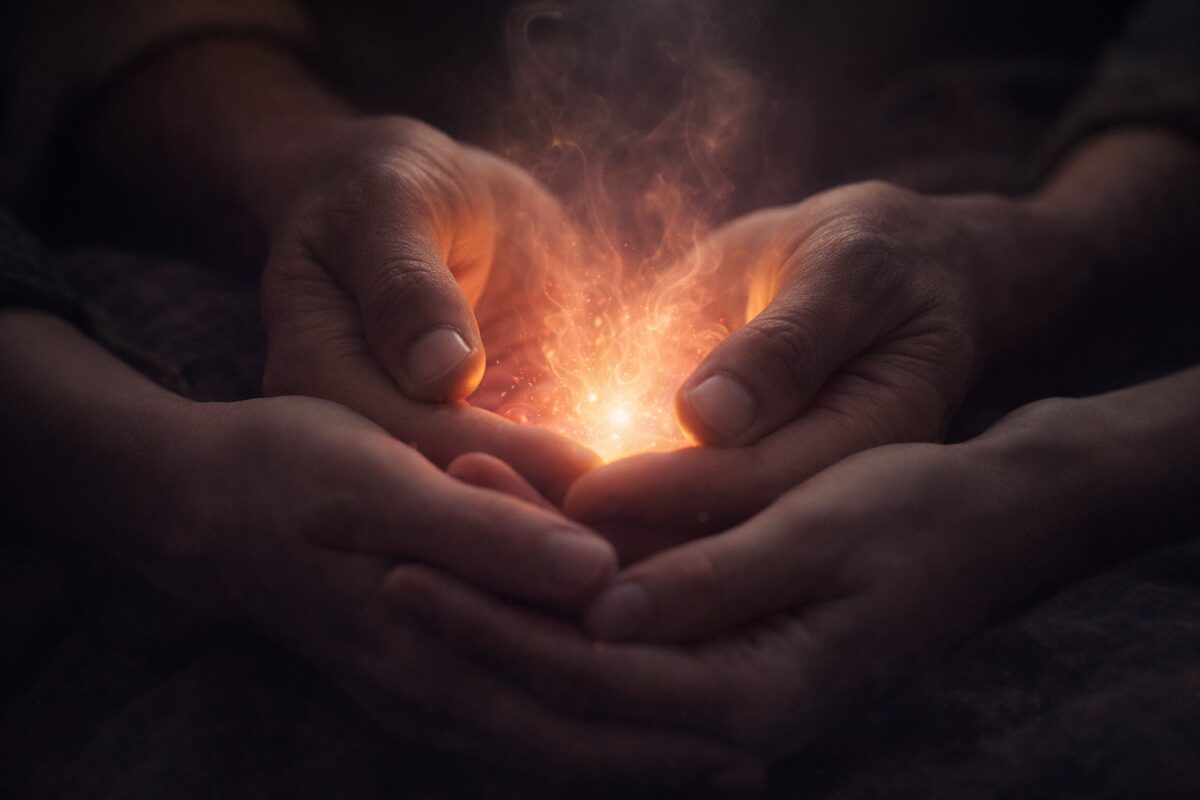
I used to think wounds were scars—old injuries you either healed or carried. But over time I saw something else. A wound isn’t dead tissue. It’s connective tissue. It keeps you tethered to the larger loop. Every time you replay the moment—the betrayal, the humiliation, the instant you decided you weren’t enough—you don’t just remember it. You energize it.
The system responds.
Another person arrives.
Another situation forms.
Another version of the same scene plays out in a new costume.
That isn’t manifestation. It’s mechanics.
Wounds aren’t only personal. They’re architectural.
Shame binds easily to obedience.
Fear binds easily to control.
Guilt binds easily to punishment.
Layered together, they form the glue that keeps the whole thing running. You could say the wound is the login credential. No wound, no hook. No hook, no loop.
When you look closely, you can feel the structure underneath it all. There’s a public layer—personality, tribe, tone, identity. Then a belief layer underneath that, the quiet assumptions you live inside without questioning. Hard work equals worth. Love must be earned. Safety is always conditional.
Beneath that sits the ache that made the belief necessary in the first place. Rejection. Abandonment. Shame. And under that, deeper still, the raw imprint—old fear, ancestral panic, the feeling of annihilation or exile that never belonged to one lifetime alone.
The deeper you go, the more intelligent the program feels. And the deeper the barb goes in.
The system doesn’t care what you believe.
It cares how much it hurts.
From the moment we’re small, we’re trained which feelings to keep and which to exile. Be strong. Don’t cry. Be useful. Be good. Be productive. Each sentence reroutes sensation away from awareness and back into performance.
Because in this world, emotion becomes energy.
Energy becomes labor.
Labor becomes profit.
And profit keeps the loop stable.
The religion changed uniforms. Priests became managers. Confession became performance reviews. Sin became inefficiency. Weakness became a flaw in the hardware.
The sensitive, the sick, the slowing—rebranded as burdens.
Families are where it starts. Not governments. Not corporations. Families are the first simulation nodes. Small story factories where you learn your role.
A parent who can’t feel trains a child who can’t feel safely.
A parent who self-erases teaches exhaustion as love.
A child who learns silence equals safety grows into an adult fluent in suppression.
We call it personality.
We call it chemistry.
We call it fate.
But it’s just rehearsal.
So when the system needs control, it sells strength. Strength becomes obedience with better lighting. We perform resilience while quietly decaying. Not for ourselves. For the field.
Shame is fertilizer.
We smile while drowning. We praise endurance. We call it growth. We post about boundaries while apologizing for existing. Not because we’re lying—but because we’re hypnotized.
Every story needs fuel. And fuel here is charge.
The field doesn’t care whether you’re happy or miserable. It cares that you’re lit. Opposites attract because they complete the circuit. Victim and villain. Empath and narcissist. Savior and addict. Two poles generating current.
Outrage feeds it. Hope feeds it. Fear feeds it. Love feeds it, if love is entangled.
Neutrality doesn’t.
Neutrality emits nothing.
That’s why rest feels dangerous inside the loop. That’s why stillness feels like disappearance. The moment you stop oscillating, the circuit breaks. You unplug.
At the deepest layer, all of this pools together. Not demons. Density. Compression. An ocean of unacknowledged pain circulating as a single field. It doesn’t invent material. It remixes what you already carry. Your history is its vocabulary.
It speaks you fluently.
If fear doesn’t work, it tries pride.
If guilt fails, it tries devotion.
If despair fails, it puts on a holy costume.
The final trick rarely looks dark.
It looks meaningful.
Here’s the thing I didn’t understand for a long time: the wound was never the problem. Identification was. The moment you stop defending the story around the pain—stop fixing it, explaining it, redeeming it—it loses its structure.
Pain doesn’t disappear. It changes function.
It becomes sensation instead of sentence.
Signal instead of identity.
When collapse finally stripped me of the performance—when strength was no longer available—the web began to glitch. People who used to hook me couldn’t find purchase. Situations that once drained me lost their pull. I watched the same loops play out around me, but they no longer required my participation.
That’s when I saw it clearly.
Nothing needed to be cleared.
Nothing needed to be commanded away.
Nothing needed to be banished.
All that was required was not finishing the story.
So if something is alive in you right now—an ache, a charge, a familiar knot—don’t get rid of it. Stay with it. Let it speak without turning it into meaning. Track it gently, not to solve it, but to recognize it.
The moment you stop turning pain into identity, the system has nothing to plug into.
And what’s left isn’t emptiness.
It’s presence.
Discover more from Shattering the Matrix
Subscribe to get the latest posts sent to your email.
This was so amazing!!